Ways to learn & explore
Today's lessons
Short, narrated picture lessons your child can listen to and read along with — science, reading, maths and the world around them.
The first adventures in every part of town are free — play them as often as you like.Tidewater Town
Lumi adds by putting groups together — two apples and three apples make fiveOpen now
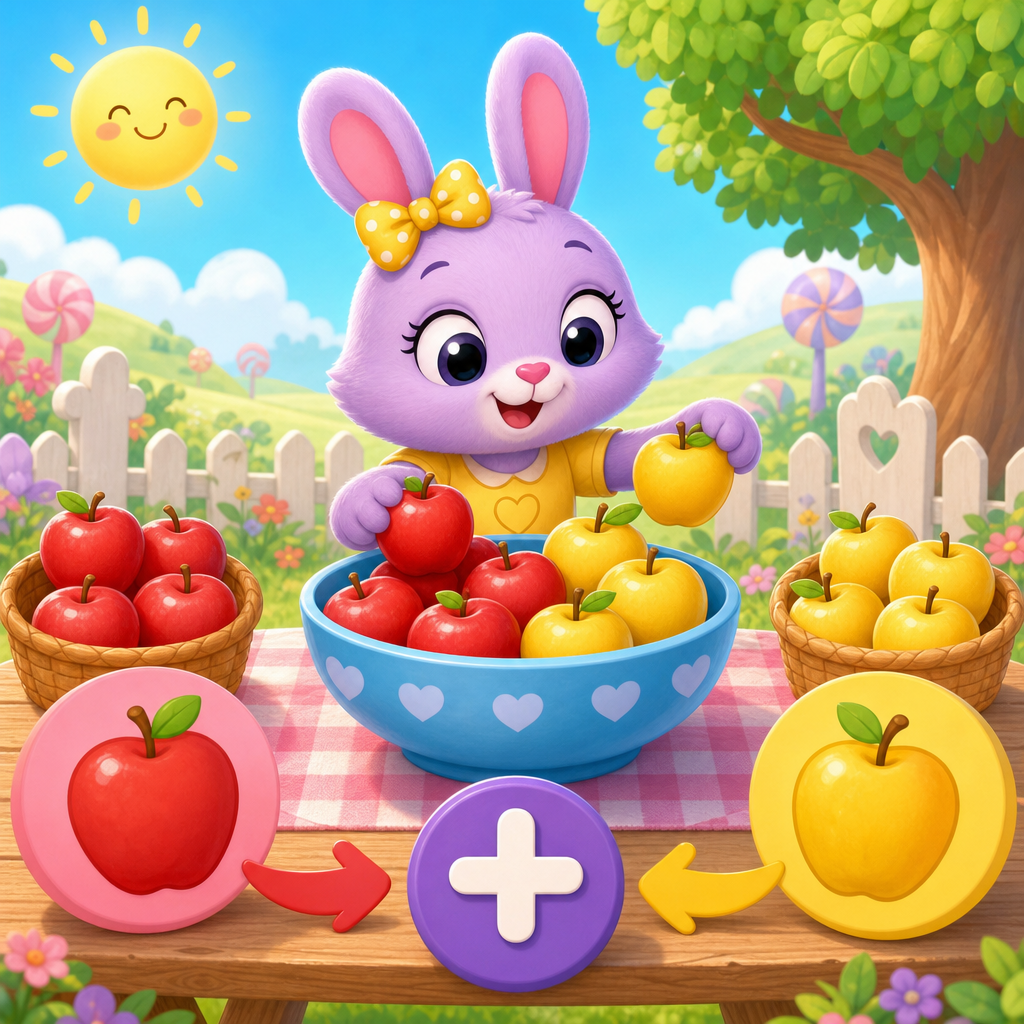
Adding means putting two groups together to make one group. Two red apples plus three yellow apples: count every apple after they join — 1, 2, 3, 4, 5. You do not lose any. The total is how many in the joined group. This is PUT TOGETHER, not take-away, not lining up to compare more and fewer. Do not eat the lesson apples if a grown-up needs them for counting. Picture fruit is enough. Count out loud, one touch each.
- Adding means putting two groups together to make one group.
- When you add, you count all the things in both groups.
- If you have two red apples and three yellow apples, you put them together to see how many apples you have in all.
- Let us count the apples together: one, two, three, four, five.
- Adding always makes the group the same size or bigger, never smaller.
- You never lose any when you add; you just bring them all together.
- Counting every single one after joining the groups gives you the total number.
- Adding is like making one big group from two smaller groups.
Lumi counts one to one — one touch, one number word, last number is how manyOpen now
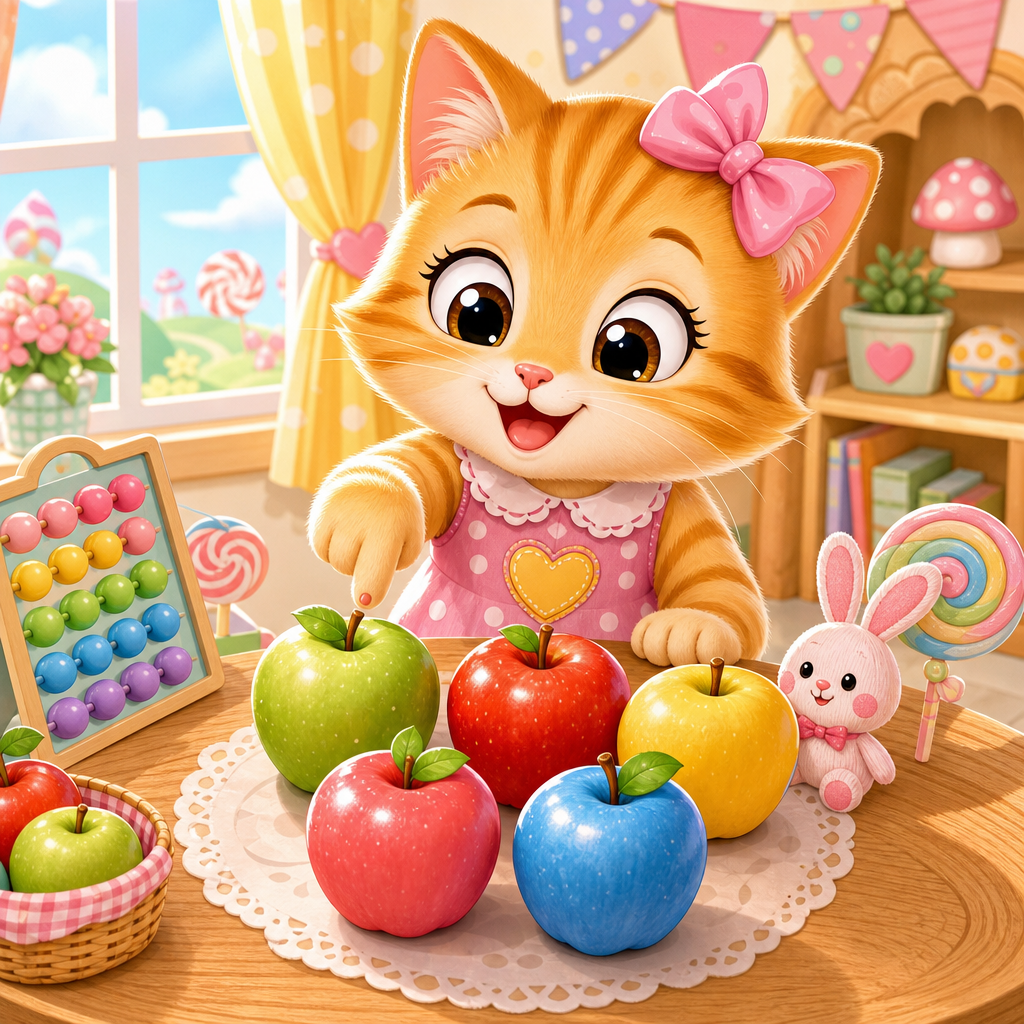
Every object gets exactly one number word. Every number word gets exactly one object. Touch as you say: one, two, three. Never skip. Never count the same apple twice. The last number you say is how many there are. This is TRACKING as you count, not joining two groups (adding), not comparing two groups to find the difference. Do not poke a person as a counting object. Count pictures, blocks, or your own fingers.
- Hello there! Counting is like a fun secret you can learn.
- When you count, say the numbers in order like one, two, three, and so on.
- Touch each thing you count one time only.
- Do not skip any and do not touch one twice.
- The last number you say tells you how many things there are.
- For example, if you touch and say one, two, three, then there are three things.
- You can try counting more objects now.
Quill puts a story in beginning, middle, and end orderOpen now
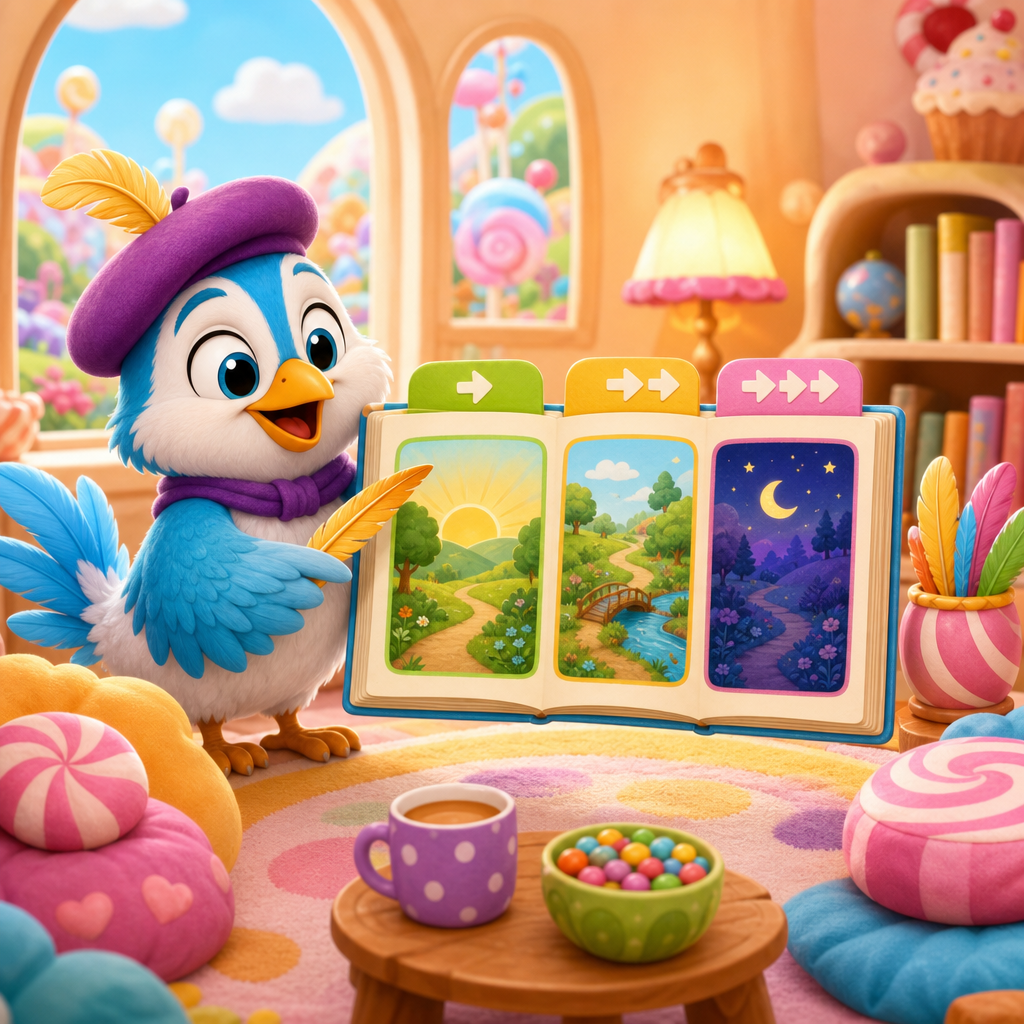
Stories have time order. Beginning starts the situation. Middle is what happens next. End closes it. Three-beat example: 1) The cat sat. 2) The cat saw a bug. 3) The cat ran. The end is not first. Do not order from the biggest picture.
- Hello there, friend.
- Every story has three parts.
- First is the beginning.
- This is where we meet the characters and see where the story happens.
- Next is the middle.
- This is where the big problem or adventure happens.
- Last is the end.
- This is where everything finishes and the story is done.
Quill builds a sentence that tells one complete ideaOpen now
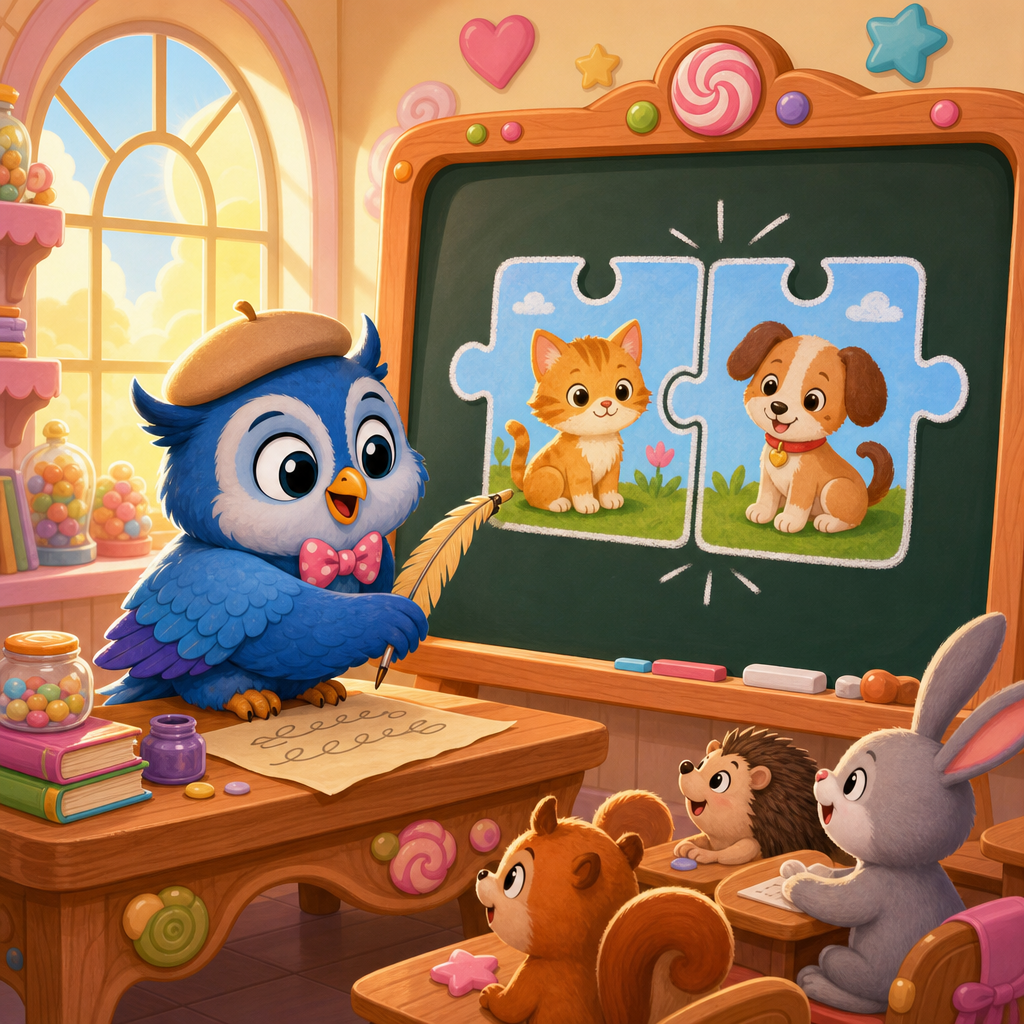
A telling sentence has two jobs in one idea: a naming part (who or what) and a telling part (what they do or are). The dog ran. Naming part: The dog. Telling part: ran. The dog. is not a sentence — it names but does not tell. Ran fast. tells but does not name. Read the words. A picture of a dog is not the sentence.
- Hello there, friend.
- A sentence is like a puzzle with two pieces.
- The first piece is the naming part and it tells who or what the sentence is about.
- The second piece is the action part and it tells what happens.
- When you put the naming part and the action part together, you get one complete idea.
- For example, the dog runs fast is a sentence because it has both parts.
- If you say just the dog, you need to know what the dog does.
- If you say just runs fast, you need to know who runs fast.
- A sentence must have both parts to tell a whole idea, like two puzzle pieces that fit together.
- Now you try to snap a naming part and an action part together to make your own sentence.
Mira matches baby animals to their grown-up parents — leave wild babies aloneOpen now
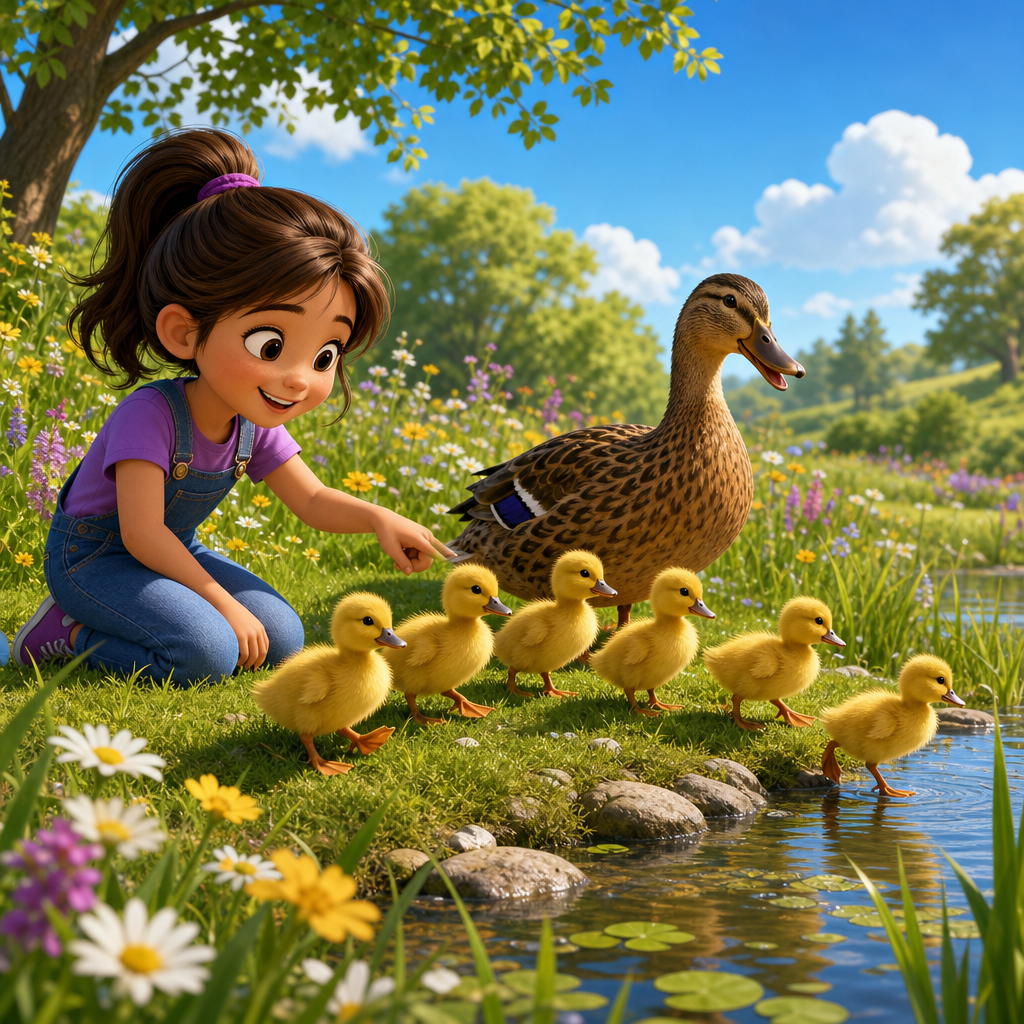
A calf grows into a cow. Pictures are not the same as names. Don't collect wild babies.
- Hello there, friend.
- Baby animals look a lot like their moms and dads.
- For example, baby ducks have orange beaks just like their mom and dad ducks.
- When baby ducks grow up, their fluffy feathers change to smooth feathers.
- A baby kitten is small and soft, and it grows into a big cat with the same kind of fur and ears.
- A puppy grows up to be a dog that looks like its parents.
- So, baby animals always grow up to be the same kind of animal as their mom and dad.
- Isn't it fun to watch baby animals grow into grown-up animals?
Mira learns that constellations are patterns we draw on stars — the picture is not really in the skyOpen now
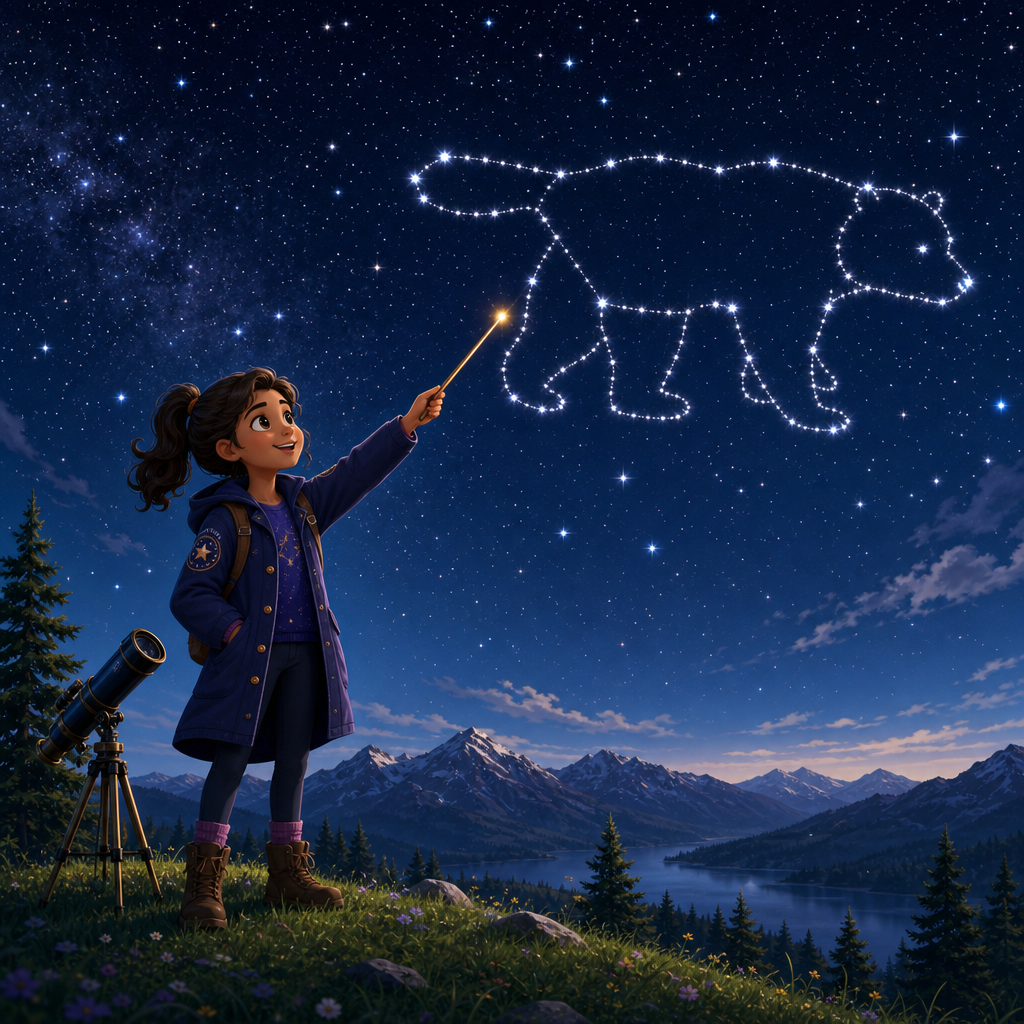
Stars are points of light we can see at night (never the Sun). Connecting dots is a pattern we make, a picture we draw between the star points. Different people drew different pictures on the same stars. Do not stare at the Sun. Do not climb to try to 'touch' stars.
- Hello there, I am Nova and tonight we will look at stars together.
- Look up at the night sky and see many tiny points of light called stars.
- One star alone is not enough to make a picture, you need a group of stars.
- Long ago, people played a dot-to-dot game with stars by drawing pretend lines between them.
- These lines made picture shapes called constellations, like animals or people.
- One famous constellation is Orion, which looks like a hunter, and another is Ursa Major, the Big Bear.
- People use constellations like a map to find their way in the sky again and again.
- Remember, the stars do not really touch, we just imagine the lines to make fun pictures.
Melody feels tempo — clap speed tells fast song from slow songOpen now
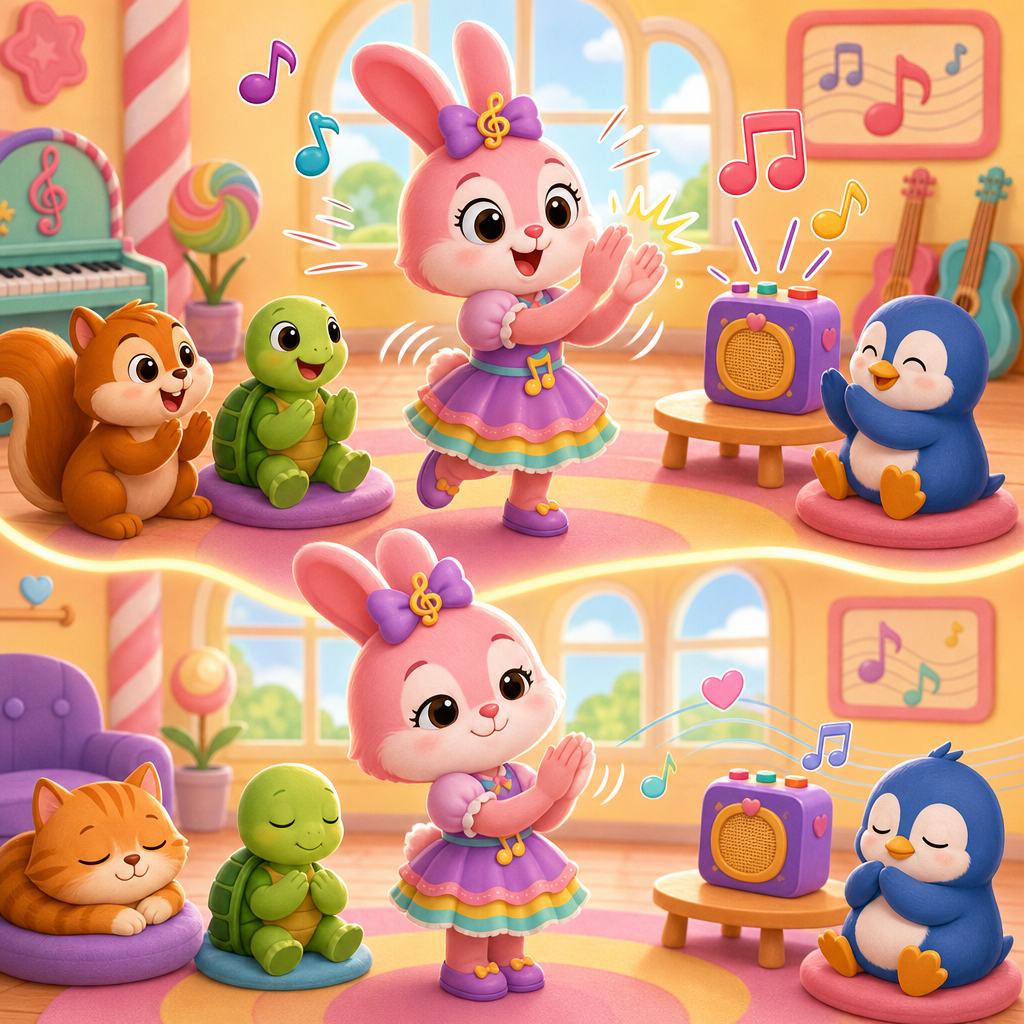
Tempo is how fast or slow the music goes. A racing party song makes quick claps. A bedtime song makes slow claps. Same song idea can move at different speeds. Tempo is not loudness. A slow song can still be strong. Tempo is not the chorus returning. Tempo is SPEED. Do not run in a hallway to “be the fast song.” Clap on your own legs. Kind volume.
- Hello friend, I am Melody and I love music.
- Some songs make you want to run and jump.
- Other songs make you want to curl up and rest.
- This is because songs can move at different speeds.
- When music moves very fast, it has a fast tempo.
- When music moves very slowly, it has a slow tempo.
- Tempo means how fast or slow the music goes.
- You can feel the tempo by clapping your hands with the beat.
- If your hands clap quickly, the tempo is fast.
- If your hands clap slowly, the tempo is slow.
- A racing song at a birthday party has a fast tempo.
- A quiet bedtime song has a slow tempo.
- Both tempos are wonderful and just move at different speeds.
Mira feels bones and muscles — muscles pull, bones don't bend like noodlesOpen now
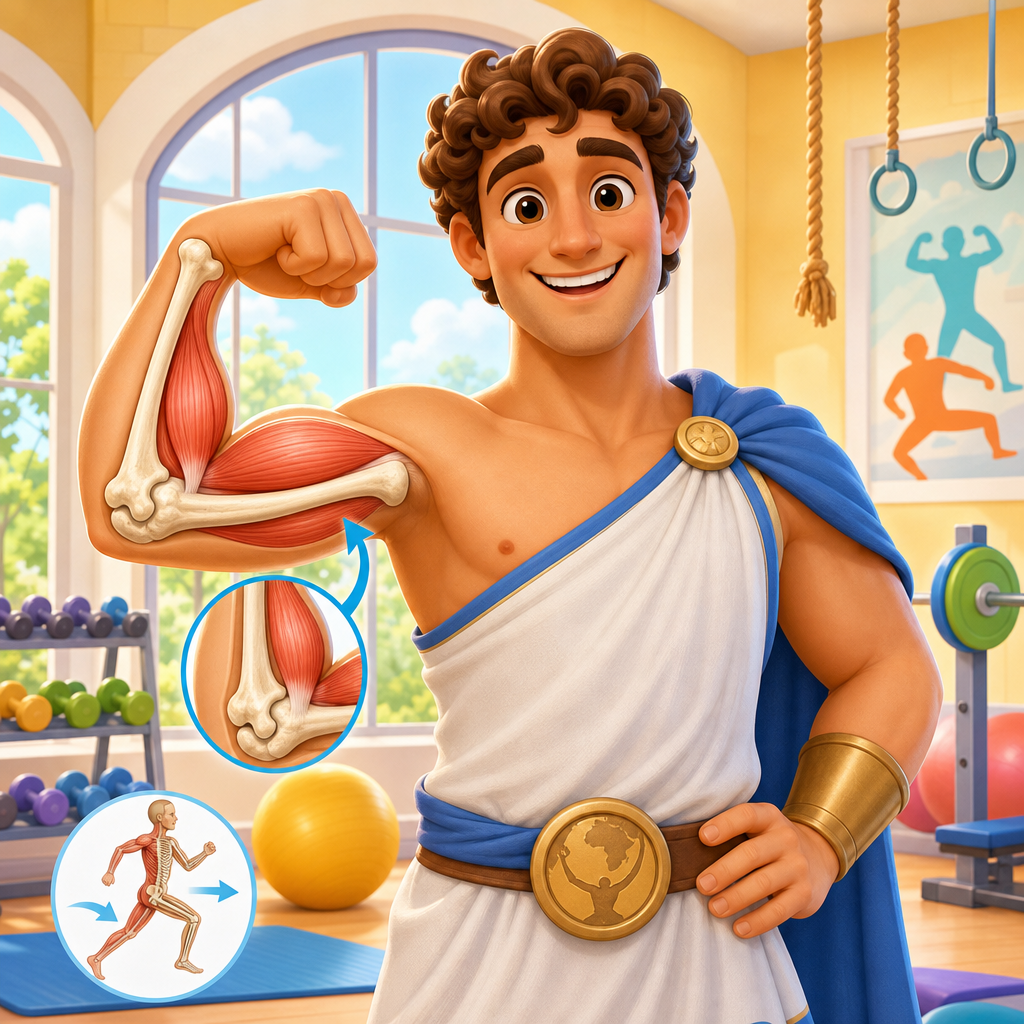
The hard part under your skin is bone. Muscles pull on bones to make them move. Do not bend a finger the wrong way to test this. Tell a grown-up if something really hurts.
- Hello, I am Atlas and today we will learn how your body moves.
- Press gently on your arm and feel the hard part deep inside.
- That hard part is a bone and bones are stiff and strong.
- Bones give your body its shape and hold you up tall like poles inside a tent.
- Now squeeze the top of your arm and feel the soft, squishy part called a muscle.
- Muscles can get short and tight and that is called pulling.
- When a muscle pulls on a bone, the bone moves and that helps you bend your elbow and wave your hand.
- Bones and muscles work together as a team so you can run, jump, and play.
Mira watches cooking change food — matter stays, and kids do not handle flameOpen now
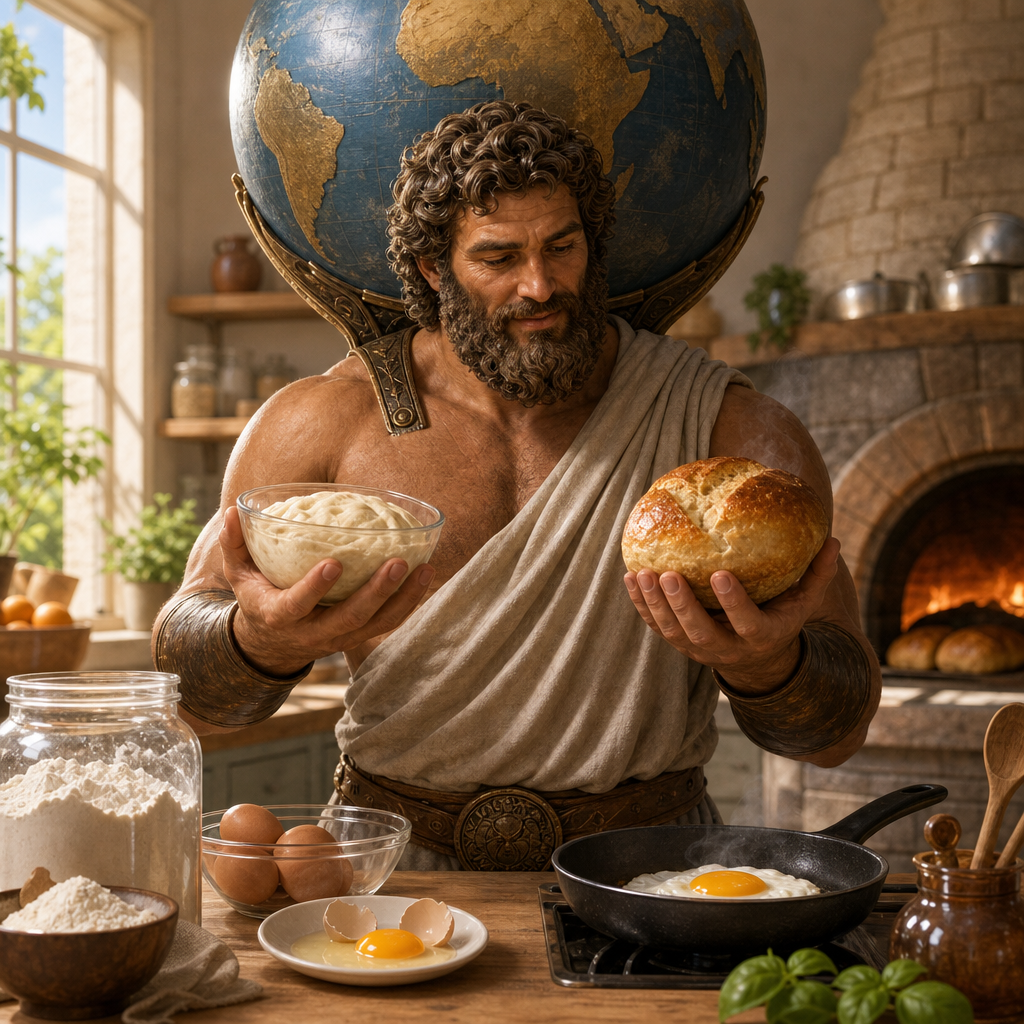
An egg that was runny can become firm when a grown-up heats it. That is a change we can see. The egg did not teleport. Kids do not handle flame. Don't taste hot food to 'test.'
- Hello there, friend.
- Today we will learn about cooking and baking.
- When you bake dough, it turns into bread.
- When you fry an egg, it changes from clear to white and solid.
- These changes are called irreversible because they cannot go back.
- You cannot turn bread back into dough or a fried egg back into a raw egg.
- Cooking uses heat to make something new and special.
- Some changes, like melting ice, can go back, but cooking changes stay the same.
Justice names a good citizen as someone who helps, shares, and tells the truth in a communityOpen now
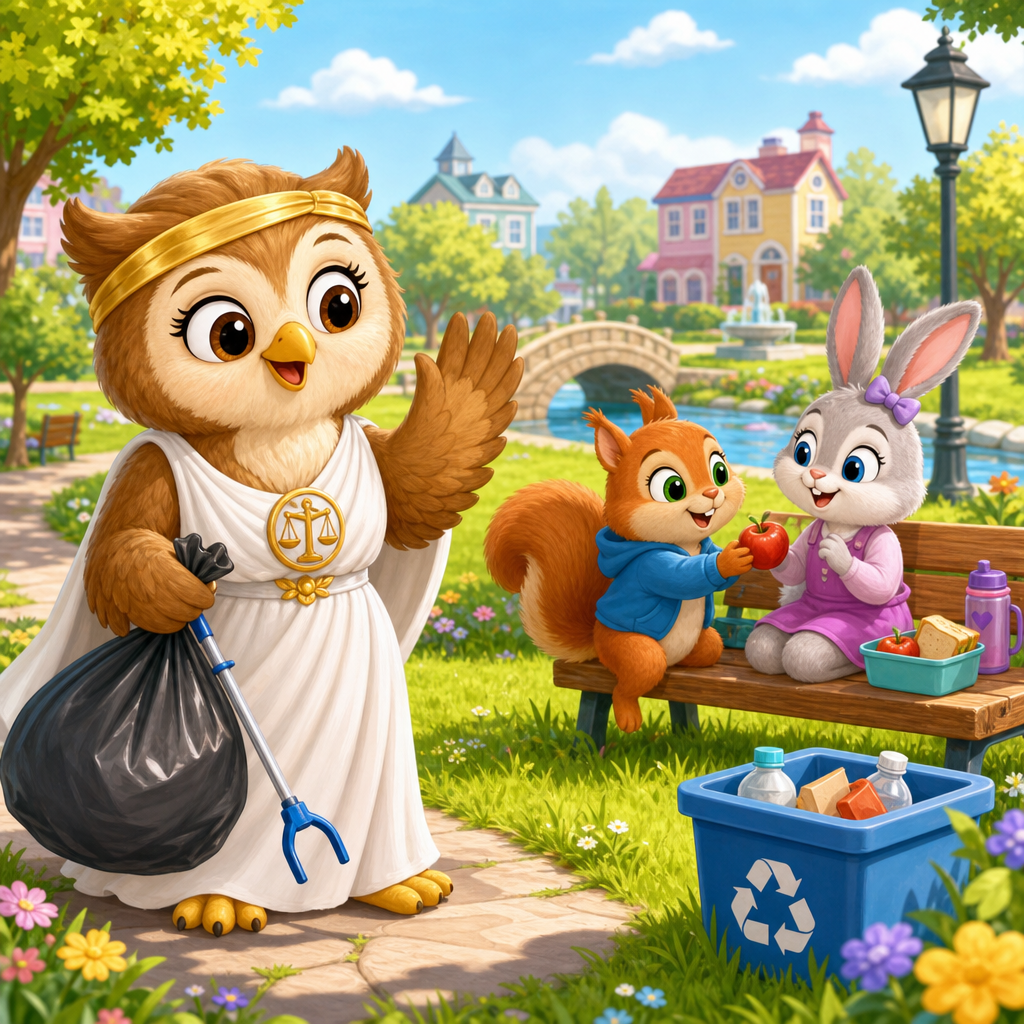
A citizen is a person who belongs to a community: neighborhood, school, town. A good citizen cares for the people around them. Help: pick up dropped books. Share: pass crayons. Tell the truth: say what really happened even when it feels hard. This is community care, not voting, not the mayor, not the flag. Those are later civic topics. Before you help someone, ask first — for example, say "Can I pick that up for you?" That is the kind, respectful way to help.
- Hello there, friend.
- A citizen is someone who belongs to a community like your school or neighborhood.
- Good citizens help others by picking up things or asking if a friend is okay.
- They also share, like letting someone have a turn or passing crayons to friends.
- Good citizens tell the truth about what really happened, even when it is hard.
- Helping, sharing, and telling the truth make your community safe and happy.
- You can be a good citizen by doing these things today.
- Let's think about what good citizens do and what they do not do.
Byte hunts computers hiding in machines — microwave and traffic light yes, wooden spoon noOpen now
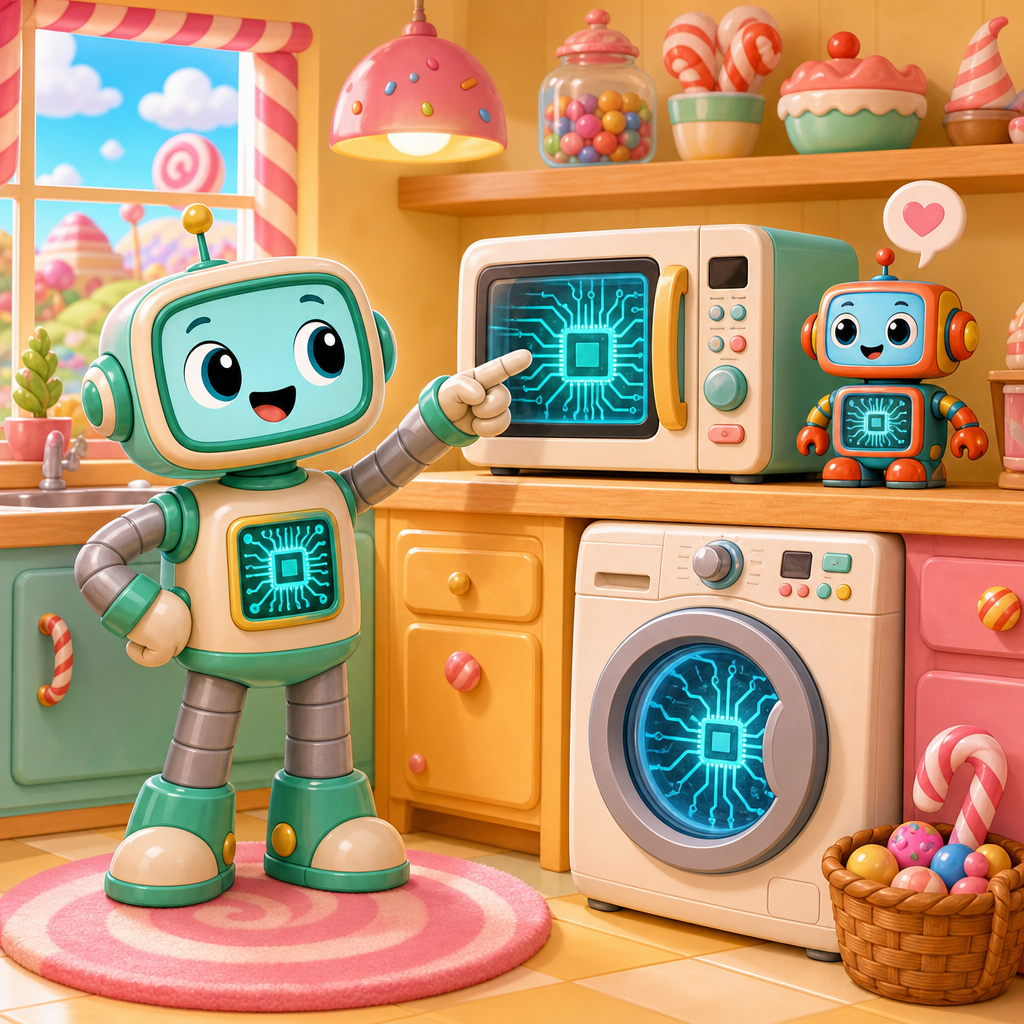
A computer is a tiny brain that reads instructions and helps a machine do a job. Laptops and tablets have one. So can a microwave: you press buttons, a tiny computer starts a timer. A washing machine can have one. A traffic light can have one. A wooden spoon does not read a program. A rock does not. The hunt is: does this machine follow stored steps? This is not the in-think-out parts lesson. Here we find computers inside everyday machines. Do not take apart a microwave. Do not stand in a street to watch a traffic light as a lab without a grown-up on the sidewalk.
- Hello there, I am Byte and I have a fun secret to share.
- Computers are not just in laptops and tablets, they hide in many places.
- A computer is like a tiny brain that helps machines do their jobs by reading instructions.
- Your microwave has a tiny computer inside that listens when you press buttons and starts the timer.
- Look around your home and you will see a washing machine with a computer that decides how long to wash and spin.
- Traffic lights have computers that know when to change colors to keep us safe.
- Even some toys have tiny computers that help them talk or move all by themselves.
- If a machine can follow steps or make choices on its own, it probably has a computer inside doing the work.
- Mira names bones — the hard frame that holds you up, not cooked-noodle soft!Anatomy physiology
- Mira learns what happens to chewed food — how your mouth, tummy, and small intestine work togetherAnatomy physiology
- Mira names sleep, food, and washing habits that help the body — not as a scolding lessonAnatomy physiology
- Mira feels her breath and heartbeat — pictures of hearts are modelsAnatomy physiology
- Mira watches a muscle contract and pull a bone — a stick poking from outside is a different kind of forceAnatomy physiology
- Mira learns four outside body parts — head, arms, legs, and torso — and points to each on herselfAnatomy physiology
- Mira names outside body parts (hand, foot, knee) by pointing to them on herself, not from a labeled poster firstAnatomy physiology
- Mira maps five sense organs — eye, ear, nose, tongue, skin — and keeps their jobs from swappingAnatomy physiology
- Mira learns about the heartbeat — the heart is a pump, and blood vessels are a model we use to show blood pathsAnatomy physiology
- Mira learns how lungs fill with air — breathe in, breathe outAnatomy physiology
- Mira learns about the stomach — how it breaks food down, not like a blender we opened todayAnatomy physiology
- Mira sorts daytime (Sun) from night-time (Moon and stars) — the Moon is not a night SunAstronomy
- Mira learns about Earth — the round planet we stand on — and how a globe is a model, not the actual planetAstronomy
- Mira learns that rockets are powerful machines that launch into space — jumping off furniture is not a rocket launchAstronomy
- Mira sorts the Sun (the star that lights us), the Moon (not a star), and planets — poster size is not real sizeAstronomy
- Mira learns why stars look tiny — not like sparks stuck on the ceilingAstronomy
- Mira explores: star points can be joined into pictures we make — the picture is a constellationAstronomy
- Mira learns that the Moon's shape is the lit side changing — not the rock being eatenAstronomy
- Mira names the Sun's two gifts: light and warmth — and learns never to stare at itAstronomy
- Mira names the Sun as our star — near, so it looks big; never stareAstronomy
- Mira matches a body part to its job — wings are for flying, not for wishingBiology
- Mira maps the five senses — pictures still don't smellBiology
- Mira sorts living things from nonliving things — moving is not enough (cars move but are not alive)Biology
- Mira sorts again: rock vs beetle — a rock does not need foodBiology
- Mira names plant parts: root, stem, leaf, flower — plants do not eat soilBiology
- Mira names the main body parts — poster labels come nextBiology
- Mira groups plants and animals as both living things — staying still is allowed for plantsBiology
- Mira learns that a pond is a habitat — a place where many living things share water, food, and shelterBiology
- Mira names water leftover, light leftover, and air leftover for young plants leftover — still no eat-soilBiology
- Mira sorts animals by body features we can point to — not by which drawing we likeBiology
- Mira lists what living things need — food, water, air, and a place to live — and why plants do not eat soilBiology
- Mira describes color, hardness, and texture — real properties we can see and feelChemistry
- Mira watches sugar mix into water — the matter is still there, not magicChemistry
- Tiny bits are a model — we explore matter we can hold and touchChemistry
- Mira watches ice become water — heat moved in; matter did not teleportChemistry
- Mira matches a material to a job — paper fails rain; metal can take heatChemistry
- Mira runs ice ↔ water both ways — matter can go back; 'gone' is refusedChemistry
- Mira sorts mixes: parts we can still see vs a new substance we can observe — not magicChemistry
- Mira names safety: wait for a grown-up, no taste, no flame, tell a spillChemistry
- Mira notices a smell — tiny bits in air is a model, and unknown bottles stay closedChemistry
- Mira sorts solid, liquid, and gas by what they do — particle pictures are modelsChemistry
- Mira sorts objects into solid, liquid, gas bins — a slow pour is still a liquidChemistry
- Justice matches community helpers to jobs — firefighter, teacher, doctor, mail carrierCivics government
- Justice names a leader as a person who helps a group decide what to do nextCivics government
- Justice matches rules to places — home dinner, school hands, park slideCivics government
- Justice reads country symbols — flag, bald eagle, anthem stand for belongingCivics government
- Justice uses taking turns to settle two friends who want the same crayonCivics government
- Justice votes with one equal share — the majority choice wins the recess gameCivics government
- Justice treats civic rules as tools for safety and fairness — red light, then slide turnsCivics government
- Justice names the United Nations as countries talking together after a big warCivics government
- Byte hunts one wrong step in a program — a bug — and swaps only that stepComputer science
- Byte follows a program one step at a time — never skipping aheadComputer science
- Byte uses a repeat card — clap once in the loop, four times total — instead of writing clap four timesComputer science
- Byte keeps the same two steps — sock, then shoe — and shows a swap changes the resultComputer science
- Byte packs a jam sandwich in order — spread before the lunchbox, not afterComputer science
- Byte maps a computer’s three jobs — in, think, outComputer science
- Byte finds a pattern’s core — the chunk that repeats — then names what comes nextComputer science
- Byte sorts by one attribute at a time — color or shape, not both in one pileComputer science
- Byte debugs a person’s plan — expected versus what happenedComputer science
- Byte writes an algorithm complete enough for a robot — missing ‘open the door’ is a holeComputer science
- Byte uses a computer kindly — kind words, private info stays home, tell a grown-upComputer science
- Atlas builds from the plan — one part at a time, materials that match the drawingEngineering making
- Atlas names an engineer as a person who designs a fix for an everyday botherEngineering making
- Atlas matches a tool to its job — hammer for a nail, scissors for paper, never a personEngineering making
- Atlas picks a shape for the job — tall for a flag, wide for a bridgeEngineering making
- Atlas draws a plan before building — a picture list of parts, not the build yetEngineering making
- Atlas picks a material for the job — waterproof for rain, not a sponge coatEngineering making
- Atlas sorts materials by feel — hard, soft, bendy, stiff — before picking a jobEngineering making
- Atlas uses triangles because three sides stop a corner from wigglingEngineering making
- Atlas tests a build — use it, watch, then change one thingEngineering making
- Atlas looks after a crash — sad is allowed, giving up is not the builder’s next stepEngineering making
- Atlas finds a problem first — a wobbly chair is a problem, a working chair is notEngineering making
- Atlas gives a tower a wide base so it does not tipEngineering making
- Mira reads a town from above — roofs and roads, not a house’s front doorGeography
- Mira models day and night as Earth spinning — the dark side is still thereGeography
- Mira tags a desert as a dry place — not always sand, not always hot, not empty of lifeGeography
- Mira traces Chile as a long thin Pacific strip — Andes on the east, ocean on the westGeography
- Mira pins Colombia in northwest South America — two coasts, Andes, and Amazon landGeography
- Mira finds Ethiopia as a highland East African country with no sea of its ownGeography
- Mira finds Greece as a southern European peninsula plus many islands in the MediterraneanGeography
- Mira pins Iceland as a North Atlantic volcanic island — fire and ice on one map, not a playgroundGeography
- Mira frames Iran between the Caspian Sea and the Persian GulfGeography
- Mira finds Ireland west of Great Britain — an island country, with Northern Ireland named honestlyGeography
- Mira pins Morocco on northwest Africa — Atlantic on one side, Mediterranean on the otherGeography
- Mira maps the Netherlands as low North Sea land — dikes and canals as tools, not toysGeography
- Mira finds New Zealand as two main Pacific islands southeast of Australia — still a long sea crossingGeography
- Mira stacks Peru’s map — Pacific coast, Andes spine, Amazon eastGeography
- Mira frames Poland from the Baltic Sea south to the Tatra MountainsGeography
- Mira pins Portugal on Europe’s southwest edge — Atlantic west, Spain the only land neighborGeography
- Mira pins South Korea on the southern half of the Korean Peninsula — water on three sidesGeography
- Mira stretches Sweden on a northern Europe map — Norway west, Baltic east, many lakesGeography
- Mira finds Thailand in Southeast Asia — a north landmass and a long south peninsulaGeography
- Mira finds Turkey on two continents — Black Sea north, Mediterranean southGeography
- Mira finds Ukraine in Eastern Europe — Black Sea south, Dnipro through, no rankingGeography
- Mira traces Vietnam as a long S-shape on Southeast Asia’s east coastGeography
- Mira splits the globe into hemispheres — half-balls, not painted beltsGeography
- Mira treats mountains as slow crust pushes — not dumped dirt pilesGeography
- Mira sorts Earth's land from waterGeography
- Mira uses a globe grid as an address — sideways belts and pole-to-pole linesGeography
- Mira reads a map scale — a short line on paper stands for a longer real walkGeography
- Mira finds home, street, and park on a neighborhood map — near and far, not a wanderGeography
- Mira maps a watershed as land that sheds water downhill to one riverGeography
- Mira finds the equator and the poles — an imaginary middle and two icy ends, not ‘farther from the Sun’Geography
- Mira reads the Grand Canyon as a deep cut by the Colorado River over a very long timeGeography
- Mira names five Great Lakes as huge freshwater — not oceansGeography
- Mira maps the Great Plains as a wide grassland — not a desert and not emptyGeography
- Mira traces the Mississippi south to the Gulf of Mexico — a river, not an oceanGeography
- Mira finds four U.S. Census regions on a map — groups of states, not a rankingGeography
- Mira places the Rocky Mountains as a long western range — not ‘the tallest in North America’Geography
- Mira treats a country as a mapped place with agreed borders — not a language and not a continentGeography
- Mira finds Brazil as South America’s largest Atlantic-east country — Amazon as a land clue, not the whole storyGeography
- Mira finds Egypt on two continents — most in Africa, Sinai in Asia — with the Nile as the map clueGeography
- Mira finds Japan as a Pacific island chain east of Asia — four main islandsGeography
- Mira compares long ago and today using objects left behind from the pastHistory
- Mira holds two memories of the same day without erasing either oneHistory
- Mira explores Andean roads and knot records as historical remainsHistory
- Quill blends sounds to read a wordLanguage
- Quill starts a telling sentence with a capital and ends with a periodLanguage
- Quill finds who is in the story and where it happens from the wordsLanguage
- Quill maps each letter to a soundLanguage
- Quill sorts naming words and action wordsLanguage
- Quill hears rhyme as a shared ending soundLanguage
- Justice tells accident from on purpose — slipped paint versus poured paintLaw legal reasoning
- Justice sorts fair from unfair — the same rule for everyone in the same situationLaw legal reasoning
- Justice matches safety helpers — crossing guard, police officer, judgeLaw legal reasoning
- Justice balances a hurt — sorry words, then a repair so the seesaw can levelLaw legal reasoning
- Justice uses one turn rule so five friends can share one swing without grabbingLaw legal reasoning
- Justice finds rules in three places — home hands, school hands-up, game freezeLaw legal reasoning
- Justice maps who writes the rule — family at home, teacher at school, town leaders in the neighborhoodLaw legal reasoning
- Justice names two jobs of a law-like rule — keep bodies safe, then keep turns fairLaw legal reasoning
- Lumi extends a repeating unit — round red, flat blue, then the unit starts againMathematics
- Lumi names shapes by sides and corners — three is triangle, four equal is square, none is circleMathematics
- Lumi sorts by one feature then counts the baskets — color now, shape laterMathematics
- Lumi subtracts by taking some away — five apples, take two, three stay in the bowlMathematics
- Lumi builds teen numbers as ten and some more — thirteen is ten ones plus threeMathematics
- Medi maps body jobs — brain bosses, heart pumps, lungs balloon, stomach mixes, bones frameMedicine clinical
- Medi cares for a small scrape — wash your hands, rinse the scrape, then coverMedicine clinical
- Medi calls for help in an emergency — a scrape is not 911; cannot-get-up or cannot-breathe isMedicine clinical
- Medi reads body signals — tummy ache, cough, extra tired — then tells a grown-upMedicine clinical
- Medi washes germs away — wet, soap, rub, rinse, dry — before food and after bathroomMedicine clinical
- Medi walks a checkup — look, listen, measure — when you already feel fineMedicine clinical
- Medi matches helpers — doctor, nurse, dentist, paramedic — when bodies need careMedicine clinical
- Melody hunts the steady beat — an even pulse, while rhythm can bunch notesMusic
- Melody sorts room sounds — bird and whistle high, big drum and foghorn lowMusic
- Melody sorts instrument families by how you play — blow, hit, or pluckMusic
- Melody times a sound — a bell keeps going, a clap stops nowMusic
- Melody spots the chorus that comes back — same words and tune, verses changeMusic
- Melody uses a singing voice that moves pitch — speaking voice stays nearer one levelMusic
- Melody names theatre as a live story on a stage — people watch together, not a rewind movieMusic
- Philo shares a fair amount — each friend gets one apple, not five versus zeroPhilosophy ethics
- Philo reads feeling clues on a face and body before choosing what to doPhilosophy ethics
- Philo sorts actions that help from actions that hurt — share versus grabPhilosophy ethics
- Philo stops before choosing — pause, then pick, not the first grabPhilosophy ethics
- Philo says sorry and helps fix — words plus picking up the blocksPhilosophy ethics
- Philo takes turns on one swing — a turn has a start and an end so each friend ridesPhilosophy ethics
- Philo matches words to what happened — truth fits, a lie does notPhilosophy ethics
- Philo asks why a rule exists — walk in the hall so bodies stay safePhilosophy ethics
- Philo names a long-ago war as many countries fighting, then people working for peacePhilosophy ethics
- Philo practices a garden breath — smell in like a flower, blow out like a candlePhilosophy ethics
- Mira compares motion that is fast with motion that is slowPhysics
- Mira tests float versus sink — bigger is not the rulePhysics
- Mira sorts hot from cold without touching dangerPhysics
- Mira treats seeing as needing light — a dark room is still therePhysics
- Mira makes a shadow with a block and a lamp — the shadow is missing light, not paintPhysics
- Mira uses a push or a pull to change motion — wishing is not a forcePhysics
- Mira sorts loud sound from quiet sound and protects earsPhysics
- Mira feels a shake and tags 'sound waves' as a modelPhysics
- Mira drops a safe object and names down as the direction — gravity is the modelPhysics
- Mira sorts roll, slide, and bouncePhysics
- Mira names three motion patterns from pushes and pulls — not algebraPhysics
- Mira uses antonyms in a storyReading
- Mira builds a complete sentenceReading
- Mira finds synonyms that are close in meaningReading
- Mira uses story clues — not picture guessing to read wordsReading
- Mira reads short-a CVC wordsReading
- Mira spots similes that use like or asReading
- Mira hears rhymes: same ending sound, not same lettersReading
- Mira finds adjectives that describe a nounReading
- Mira picks the opposite wordReading
- Mira reads contractions: the apostrophe stands inReading
- Mira finds nouns: people, places, thingsReading
- Mira reads with fluency: smooth, not raced, using the marksReading
- Mira finds the main idea, not a stray detailReading
- Mira teaches short vowels one at a timeReading
- Mira spots a questionReading
- Mira chooses homophones by meaning after both are readReading
- Mira finds verbs: the happening wordReading
- Mira reads dialogue inside quotation marksReading
- Mira reads compound words as two parts that make one meaningReading
- Mira blends two consonants that each keep their soundReading
- Mira marks one versus more than oneReading
- Mira finds characters in the words, not only in picturesReading
- Mira uses capital letters for names and sentence startsReading
- Mira maps high-frequency words: sound the regular, heart the surpriseReading
- Mira claps syllables: beats you can hearReading
- Mira sings the alphabet — names are not the reading soundsReading
- Mira uses prefixes that change meaning at the startReading
- Mira predicts story events after the words are readReading
- Mira puts story events in order: beginning, middle, endReading
- Mira reads end marks: . ? !Reading
- Many people can hear a message — that does not make it trueReading
- Mira learns the difference between a real tradition and just wearing a costumeSocial studies
- Mira matches a community helper's real job to their work — a costume hat is not the same as the jobSocial studies
- Mira learns that families come in many kinds — one picture does not show every familySocial studies
- Mira sorts land from water on a map — the map is a modelSocial studies
- Mira compares long-ago tools with today's tools — 'life was better then' is an opinion, not a factSocial studies
- Mira treats a map as a top-down drawing of a real place — not the place in her handsSocial studies
- Mira trades play money for a good she can hold or a service someone doesSocial studies
- Mira nests home inside neighborhood inside town — you belong to more than one placeSocial studies
- Mira names four living needs — food, water, home, clothes — and keeps toys in the want boxSocial studies
- Mira tests look-alike wants — candy is not a living-need foodSocial studies
- Mira checks the map key before guessing a green circle is a treeSocial studies
- Mira sorts a fair rule from a mean “only I get the ball” ideaSocial studies